History of the Mobile Phone
In 1946, the mobile phone did not exist, but the first mobile call was made in the United States using car radio technology. In 1973, the first call from a portable device was made possible thanks to a prototype of the Motorola DynaTac. The Motorola DynaTac 8000X was then available to the public as the first mobile phone in 1993, but it weighed nearly a kilogram and cost around $4000, making it very inaccessible to the population.
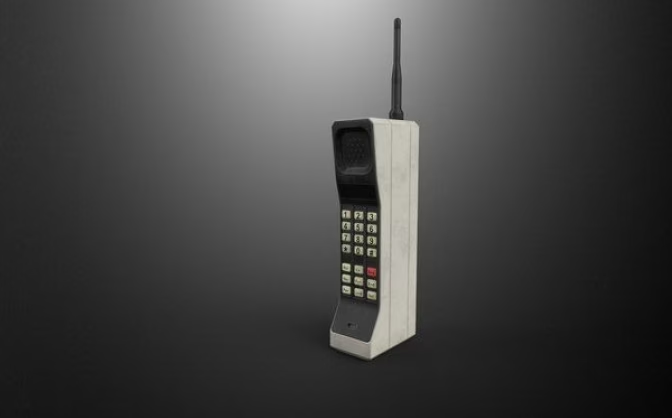
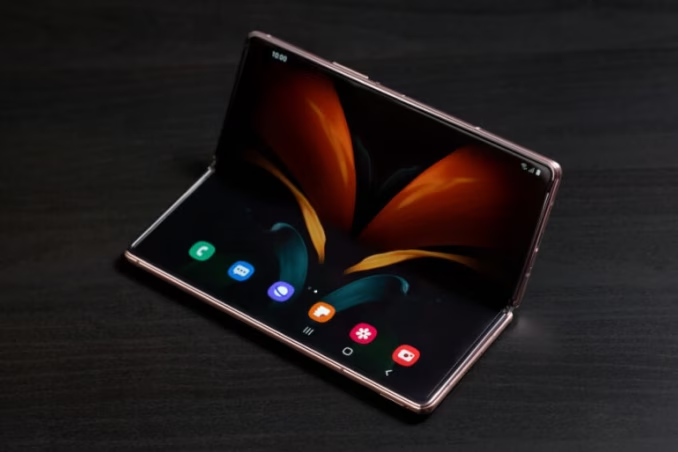
In 1991, the first 2G network emerged, allowing long-distance communication by sending SMS. In 1996, the release of the first flip phone represented an important step in the miniaturization of devices. In 1999, it became possible to take photos and send them thanks to an integrated camera. In 2000, 3G mobile networks finally allowed mobile internet access. In 2007, Apple launched its first iPhone, revolutionizing the market with its touchscreen and ease of use. In 2019, the first 5G networks increased connection speeds and enabled new innovations such as connected objects. Finally, in 2020, the first foldable phones, like the Samsung Galaxy Z Fold, redefined design limits.
Subsequently, the phone will become an obsolete object due to the democratization of Neuralink, whose human testing by Elon Musk was successful in 2024. However, it is only in many years, in 2882, that the Earth's population will have forgotten the phone after being fully equipped with its evolution, the Neuromni-Link.